on
Health Tips
- Get link
- X
- Other Apps
It has a silly name, and that is exactly why it is everywhere today. The "fart walk" — a short, easy stroll after a big meal — is the health tip of Thanksgiving Day, with the Washington Post, Prevention, Good Housekeeping and Yahoo Health all covering it on 26 November 2026. Behind the joke of a name sits a genuinely useful habit, backed by real research: walking for a few minutes after you eat can calm a bloated stomach and take the edge off a blood sugar spike.
The idea is simple. Instead of sinking into the couch after a heavy dinner, you step outside for ten to twenty minutes, at an easy pace, within an hour of your last bite. No gym, no special shoes, no workout clothes. Just a walk — and your gut and your blood sugar both notice the difference.
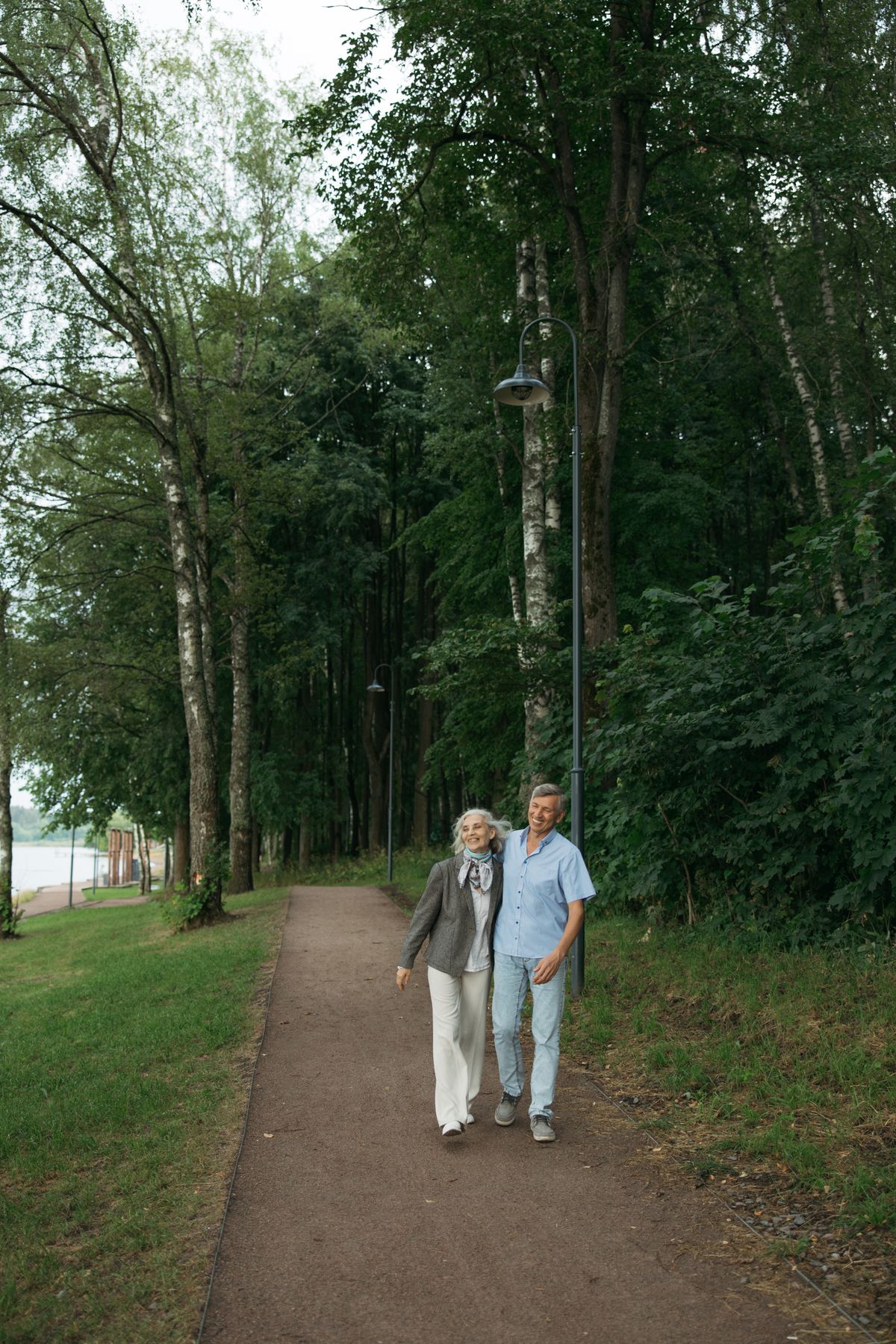
A couple enjoying an easy walk in the park. A short stroll after a big meal is all the "fart walk" asks for — no gym, no workout clothes. (Photo: Pexels)
The term was coined by Mairlyn Smith, a Canadian cookbook author, who posted about it on TikTok in March 2024. Smith, then 70, filmed herself and her husband walking after dinner to let out the gas that builds up after a meal — and the video took off. The hashtag has since gathered hundreds of thousands of likes, and Smith has even trademarked the phrase. Her own advice is modest: a walk of two to twenty minutes after dinner, she says, helps you "age wonderfully."
The name may be new, but the habit is old. Italians have the passeggiata, the evening stroll after dinner that whole towns take together. An old Chinese saying advises a hundred steps after every meal. What Smith did was give a timeless habit a name people remember — and this Thanksgiving, with millions of people sitting down to the biggest meal of the year, health experts are using the moment to explain why it actually works.
After a big meal, bacteria in your gut ferment the food you have eaten, and gas builds up. That is normal — but when the gas has nowhere to go, you feel bloated and heavy, as if the meal is sitting in your stomach like a brick. Walking helps because movement wakes up the gut itself.
"The bowel does move well on its own, but it moves better when you move," says Dr Christopher Damman, a gastroenterologist at the University of Washington School of Medicine. Walking stimulates peristalsis — the wave-like muscle contractions that push food along the digestive tract — so food keeps moving, gas escapes more easily, and bowel movements stay regular.
Dr Tim Tiutan, an internal medicine physician trained at NewYork-Presbyterian Hospital, puts it plainly: "Walking after meals does promote intestinal motility, or movement of our intestines, to get rid of gas and prevent constipation." Dr Tania Elliott, an internal medicine specialist and allergist at Mount Sinai, recommends the same thing after a heavy meal, noting that studies show a 15 to 20 minute walk after eating can stimulate digestion and reduce bloating.
There is wider evidence, too. A Japanese study from 2020 found that people with irritable bowel syndrome cut the severity of their symptoms by up to 50 percent when they raised their daily step count from 4,000 to 9,500. Regular walking is also linked with a lower risk of bowel cancer and diverticular disease, both of which are associated with constipation.
The blood sugar benefit is where the science is strongest — and the numbers are striking for something so small. A 2022 meta-analysis of seven studies, led by researchers at the University of Limerick, found that just two to five minutes of light walking after a meal cut post-meal blood sugar by about 17 percent compared with sitting. Standing helped a little (about 9.5 percent), but walking was clearly better, because contracting muscles pull glucose out of the blood through a pathway that does not depend entirely on insulin.
"It is a little bit of a black box," said study lead Dr Aidan Buffey. "The assumption is that rather than producing more insulin to help transport glucose, by taking a walk or by doing some exercise, our contracting muscles stimulate the uptake of glucose." A 2023 meta-analysis added that people with diabetes show better insulin control when they walk within 30 minutes of finishing a meal.
Longer walks add more. A 2012 study published in Diabetes Care gave overweight adults a sugary, fatty drink, then had some of them walk for two minutes every 20 minutes. Light walking cut the overall blood sugar response by about 24 percent; moderate walking cut it by about 29 percent. And a 2016 study of adults with type 2 diabetes found that three 10-minute walks after meals beat one 30-minute walk by 12 percent overall — and by 22 percent after dinner, the biggest meal of the day. The total walking time was identical. Only the timing changed.
That timing is exactly what makes the post-Thanksgiving walk so useful. Experts at Texas Christian University recommend heading out instead of straight to the couch. "It is healthy for us to handle that glucose as quickly as possible," said Ryan Porter, an assistant professor of kinesiology at TCU, because muscle contractions during a walk draw on energy from the meal and bring glucose down faster. His colleague McKale added the simplest version of the advice: "Even a walk around the block is better than going straight to the couch."
There are no strict rules, but the experts agree on the shape of it:
If you want to build on the habit, our guide to five-minute walks through the day shows how the same idea — short walks, spread out — beat one long walk for blood sugar in a new six-week trial. The Japanese walking method adds a brisk-easy rhythm for days you want more from a walk, and our Thanksgiving dinner guide covers how to enjoy the feast itself without the food coma.
Honesty matters here. A short walk after dinner is not a weight-loss plan — no trial has shown post-meal walking changes body composition. It will not undo a whole day of overeating, and it is not a treatment for diabetes. What it reliably does is flatten the blood sugar curve after a meal, ease bloating, and help you feel better an hour after eating than you would have on the couch. That is a modest claim, and it is the one the evidence actually supports.
It also helps in ways that are harder to measure. The TCU experts note that a post-meal walk decreases holiday stress and anxiety, and can improve sleep that night. A walk outside, with family, after a long day of cooking and eating, is simply a better way to end the meal than a food coma in front of the television.
So this evening, when the plates are cleared and the couch is calling, try the walk with the funny name. Ten minutes, easy pace, out the door. Your stomach will thank you — and your blood sugar will, too.
This article is general information, not medical advice. If you have diabetes or a health condition, speak to a healthcare professional before changing your activity routine.
A short, easy walk of 10 to 20 minutes taken within an hour after a big meal, to help digestion, reduce bloating and let gas escape. The term was coined by Canadian cookbook author Mairlyn Smith on TikTok in March 2024, but the habit itself is old — Italians call the evening after-dinner stroll the passeggiata.
Ten to 20 minutes is the widely recommended length for digestion and bloating. But even two to five minutes of light walking after a meal cuts post-meal blood sugar by about 17 percent compared with sitting, according to a 2022 meta-analysis of seven studies.
Within 30 to 60 minutes of your last bite, before blood sugar typically peaks at 60 to 90 minutes. A 2023 meta-analysis found the best insulin benefit when the walk starts within 30 minutes of finishing the meal.
Yes. Pooled trials show two to five minutes of light walking after eating cuts post-meal blood sugar by about 17 percent versus sitting. A 2012 Diabetes Care study found two-minute walking breaks cut the glucose response by 24 percent, and a 2016 study found three 10-minute post-meal walks beat one 30-minute walk by 12 percent overall and 22 percent after dinner.
Yes. Walking stimulates peristalsis, the muscle contractions that move food through the gut, which helps gas escape and keeps bowel movements regular. Gastroenterologists recommend a 15 to 20 minute walk after a heavy meal for digestion and bloating relief.
Not on its own. No trial has shown that post-meal walking changes body composition. It reliably improves blood sugar control and digestion, but weight loss still needs an overall calorie balance and regular exercise. See our guide to how sleep affects weight loss for the bigger picture.
Sources: BBC Science Focus — Could a "fart walk" actually help reverse diabetes?, Healthline — 2-Minute Walk After Meal Helps Lower Diabetes Risk, Medical Xpress — The health benefits of going for a walk after a meal, Newsy Today — Experts Recommend Post-Meal Walk After Thanksgiving to Process Glucose, Hillary Lin, MD — Walking After Meals: How Much It Lowers Blood Sugar, Diabetes Care — Breaking Up Prolonged Sitting Reduces Postprandial Glucose and Insulin Responses.
Comments
Post a Comment