on
Health Tips
- Get link
- X
- Other Apps
Every year, a simple idea comes along that makes a lot of us rethink how we exercise. In 2026, it was Japanese walking. It does not need a gym, a watch, or any special gear. It just asks you to walk fast for three minutes, then slow down for three minutes, and keep swapping between the two.
It sounds almost too plain to work. That is part of why it caught on. PureGym named Japanese walking the fastest-growing fitness trend in its 2026 fitness report, with searches up 2,968% on the previous year. But a trend is not the same as good advice, so it is worth looking at where the idea came from, what the research actually found, and how to try it without overdoing it.
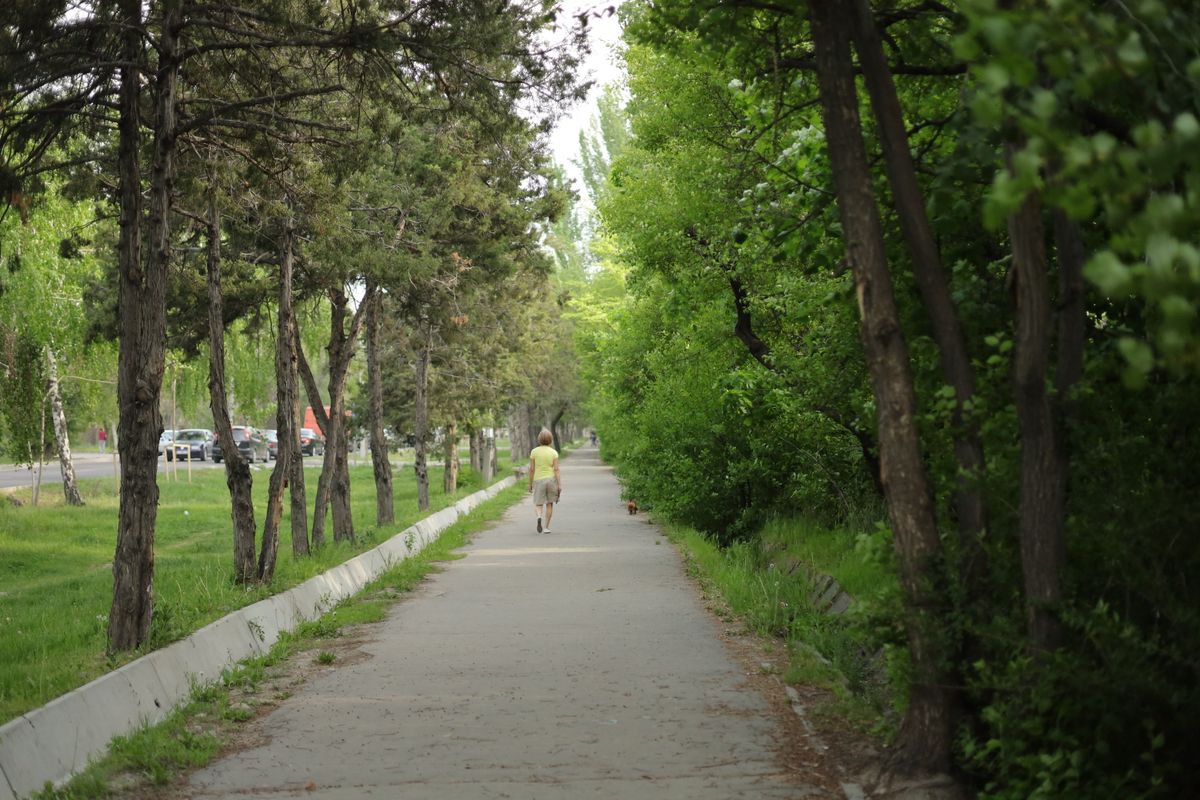
Photo: A quiet, tree-lined park path — the kind of flat, even route that suits interval walking. This is a stock photo from Pexels, not a photo of the researchers or a specific walking session.
Japanese walking is better known in research as interval walking training. It was developed at Shinshu University in Japan by Professor Hiroshi Nose and his colleague Shizue Masuki, who wanted a form of exercise that older adults could stick with and that would still give them a real workout.
The method is simple. Walk briskly for three minutes, at an effort of about 70% of your peak aerobic capacity. Then walk slowly for three minutes, at about 40%. Repeat that pair five times, and you have a 30-minute session. In the original research, people did this at least four days a week.
What does "fast" mean in real life? You should be breathing harder and finding it tricky to hold a full conversation, though you can still get out short sentences. The slow part should feel easy, like a normal stroll. You do not need to sprint. The fast sections are brisk, purposeful walking — arms swinging, steps a bit longer, pace clearly quicker than usual.
The Shinshu team studied interval walking over five months. People who did the intervals improved their aerobic fitness and leg strength more than people who walked at a steady pace for the same amount of time. That is the key point: the benefit came from changing pace, not from walking for hours.
WebMD, summarising the research, put it in plain terms — about two hours a week of interval walking gave greater fitness gains than the roughly 10 hours a week it would take to reach 10,000 steps a day. That does not mean 10,000 steps is a bad goal. It means short, focused sessions can be an efficient way to get fitter, especially if a long daily walk does not fit your life.
It is also worth keeping the limits in mind. Much of the original research involved older adults, so we should be careful about promising the same results for everyone. The studies were relatively small, and walking alone will not build much upper-body strength or replace other kinds of training. What the evidence does support is more modest and more useful: regular interval walking can improve fitness and leg strength, and it is a practical way to reach the kind of moderate activity health guidelines recommend.
The NHS recommends adults aim for at least 150 minutes of moderate activity a week, or 75 minutes of vigorous activity, plus muscle-strengthening activity on two days. Five 30-minute interval walks a week would meet the moderate-activity part of that target, and the brisk sections push you towards the harder end of moderate. Walking is also listed by the NHS as a simple, free way to get more active, with benefits for heart health, mood and joints.
Japanese walking suits a lot of people, which is probably why it spread so quickly. It suits beginners who find running too much, older walkers who want to stay strong, and busy people who can find 30 minutes but not an hour. Because it is low impact, it is often kinder on knees and ankles than running, and because you can do it anywhere flat and safe, there is no membership or equipment to arrange.
It also suits people who get bored on a steady walk. The three-minute changes give the session a shape. You are always counting down to the next change, which makes 30 minutes pass faster than you might expect.
It is not for everyone, though. If you have a heart condition, chest pain, uncontrolled blood pressure, diabetes, balance problems, or a recent injury or surgery, talk to your doctor first. The same applies if you get dizzy or breathless more easily than usual. And it is not a complete fitness plan on its own — you will still benefit from some strength work, such as the home workout ideas on Fitness Hub, and from stretching and balance work as you get older.
Start gently. The original research used 30-minute sessions, but you do not need to start there. Build up over four weeks, and keep the fast sections honest but comfortable. Warm up for two or three minutes at an easy pace before your first fast section, and cool down the same way at the end.
Week 1 — Get the feel of it. Three days a week, 18 minutes in total: three pairs of three minutes fast and three minutes slow. Focus on the rhythm rather than speed. If you are very unfit, start with two pairs and add a third when you feel ready.
Week 2 — Add a day. Four days a week, 24 minutes in total: four pairs. Your fast pace should feel purposeful by now. Keep your shoulders relaxed and let your arms swing naturally.
Week 3 — Reach the full session. Four days a week, 30 minutes in total: five pairs. This is the session used in the research. You may notice the slow sections feel easier, and you recover faster between fast sections.
Week 4 — Make it a habit. Five days a week, 30 minutes in total. Try one session on a gentle hill or, if the weather turns, on a treadmill using the same three-minute pattern. Our treadmill guide can help if you are setting one up at home. After week four, keep the five-day pattern, or settle on four days if that is what you can sustain — consistency matters more than a perfect week.
A few practical tips help. Pick a flat, even route with few road crossings, so you are not stopping every minute. Wear comfortable shoes with good grip. Take water on warm days, and walk in the cooler part of the day when it is hot. If you use a phone timer, set it to beep every three minutes so you do not have to keep checking the screen.
If you are curious about how much energy you are using, try our Calorie Calculator to get a rough estimate for your weight and pace. Treat the number as a guide, not a precise measurement — calculators estimate, they do not measure.
Stop and rest if you feel chest pain, severe breathlessness, dizziness, or pain in a joint that does not ease when you slow down. Soreness in your calves or thighs in the first week is normal, especially if you have been inactive, but sharp pain is not. Give yourself a rest day between sessions if you are new to exercise, and build up gradually rather than jumping straight to five days a week.
Walk facing traffic if there is no footpath, wear something bright if you are out early or late, and tell someone your route if you are walking in a quiet area. None of that is exciting, but it is what keeps a good habit safe.
Japanese walking is not a trick in the sense of a shortcut. It is a sensible idea, tested over months by researchers, that makes ordinary walking work a bit harder for you. Three minutes fast, three minutes slow, five times over, four or five days a week — that is the whole method. If you have been looking for a way to get fitter without joining a gym or taking up running, it is a genuinely good place to start.
How long is one Japanese walking session?
The full session used in the research is 30 minutes: five pairs of three minutes fast and three minutes slow, done at least four days a week. Beginners can start with 18 or 24 minutes and build up.
How fast is the fast part?
Brisk enough that you can speak in short sentences but not chat comfortably — about 70% of your peak aerobic capacity in the research. You should be breathing harder, but you should not be gasping.
Is Japanese walking better than 10,000 steps a day?
It is not better in every way, but research summarised by WebMD found that about two hours a week of interval walking gave greater fitness gains than the roughly 10 hours a week needed to reach 10,000 steps a day. Steps still count — the intervals are simply a more time-efficient way to improve fitness.
Can I do Japanese walking on a treadmill?
Yes. Set the treadmill to a comfortable walking speed for the slow sections and a clearly faster speed for the fast sections, keeping the same three-minute pattern. Hold the rails only if you need them for balance.
Is Japanese walking safe for older adults?
The original research focused on older adults, and walking is low impact, but check with your doctor first if you have a heart condition, balance problems, or any condition that affects exercise. Start with shorter sessions and a flat, even route.
Comments
Post a Comment