on
Health Tips
- Get link
- X
- Other Apps
Starting exercise can feel like the hardest part is getting started. You do not need a gym membership, fancy gear or an hour to spare. A short, steady routine at home, done three times a week, is a realistic way to build strength, move better and feel more energetic — and twenty minutes is enough to make it count.
This routine uses five simple bodyweight moves. It works your legs, chest, glutes and core, with a warm-up first and a short cool-down at the end. Go at your own pace, rest when you need to, and focus on doing each move well rather than rushing through it.
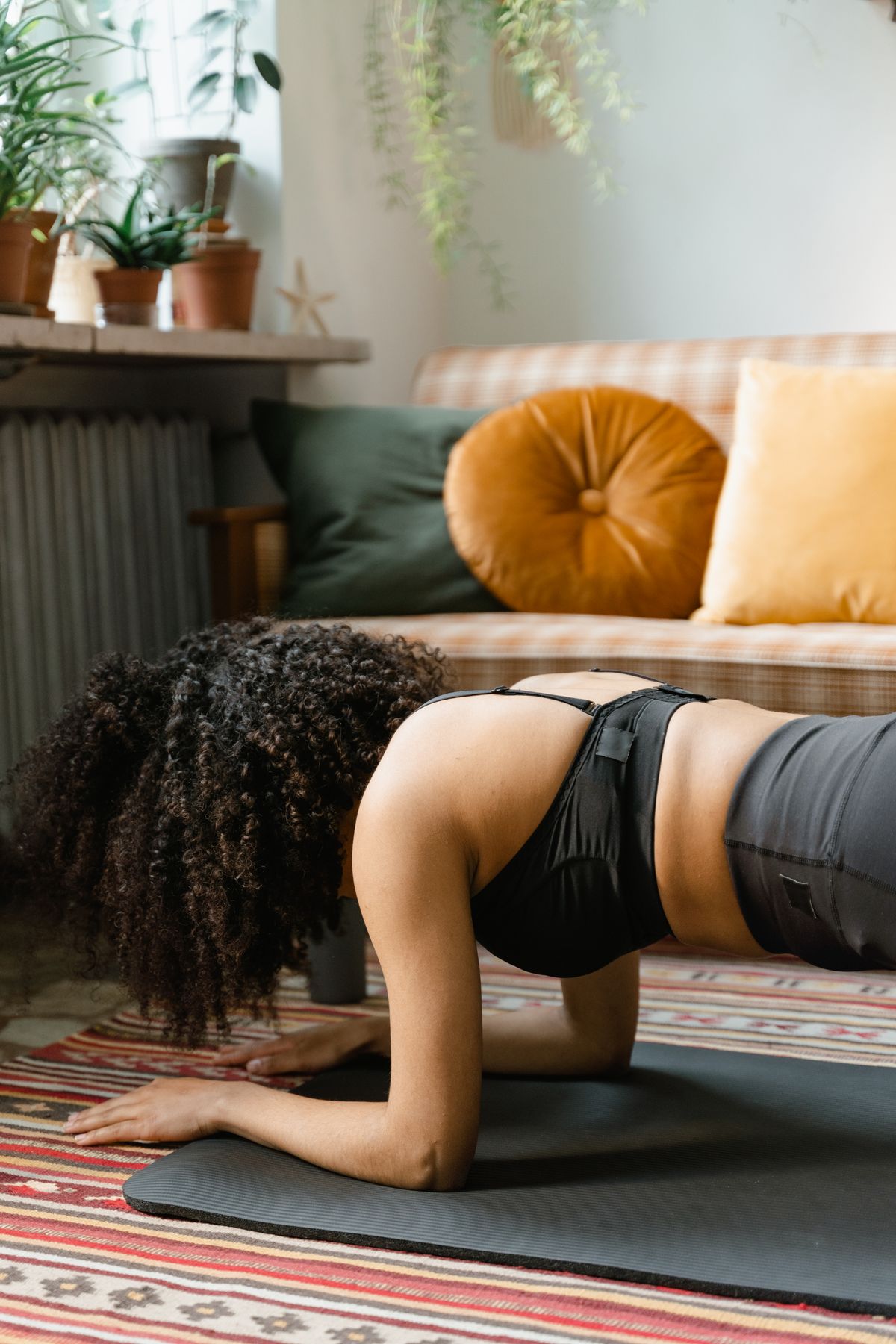
A woman holding a plank on a yoga mat at home. Photo: MART PRODUCTION / Pexels. This is a free stock photo, not a Fitness Hub workout session.
The NHS physical activity guidelines for adults aged 19 to 64 suggest at least 150 minutes of moderate activity, or 75 minutes of vigorous activity, each week, spread across four to five days, plus strengthening activities that work all the major muscle groups on at least two days a week. That sounds like a lot when you are starting from scratch, but it is meant as a target to build towards, not a test you have to pass on day one.
Three twenty-minute sessions give you an hour of structured movement a week. Add in everyday walking — to the shops, around the block, up the stairs — and you are already moving in the right direction. Healthline makes a similar point in its at-home workout guide: working out at home can help boost strength, mood and overall health, and bodyweight moves are a practical way to do it without equipment.
The other reason this plan works is that it is easy to repeat. A routine you actually do three times a week beats a perfect routine you do once and then give up on. Keep the sessions short, keep them regular, and let the habit do the heavy lifting.
Very little: a clear patch of floor about the size of a yoga mat, comfortable clothes, a water bottle and a chair or wall nearby for balance if you want it. A mat helps if your floor is hard, especially for the plank and glute bridge, but a rug or carpet works too. Put your phone on silent, open a window if you can, and give yourself a proper twenty minutes without interruptions.
Do not skip the warm-up. It raises your heart rate gently, loosens stiff joints and gets your muscles ready to work. Healthline and other guides suggest five to ten minutes of easy, dynamic movement before a workout; three minutes is a sensible minimum for a short session like this one, and you can take longer on cold mornings.
March on the spot for one minute, lifting your knees a little higher as you go and swinging your arms. Then do ten slow arm circles in each direction, ten gentle hip circles, and ten easy squats where you only go as far down as feels comfortable. Finish with a slow walk around the room and a few deep breaths. You should feel warmer and looser, not tired.
Do the five moves one after the other, resting for 30 to 45 seconds between moves. That is one round. Rest for 60 to 90 seconds, have a sip of water, then repeat the whole circuit once more. Two rounds should take about twelve minutes, plus the warm-up and cool-down, which brings the session to roughly twenty minutes.
Stand with your feet about shoulder-width apart, toes pointing slightly out. Push your hips back and bend your knees, lowering yourself as if you are about to sit on a chair. Keep your chest up and your knees tracking in line with your toes, not collapsing inwards. Go as low as you can while keeping your heels on the floor, then push through your heels to stand back up. ACE Fitness describes the bodyweight squat as a way to build lower-body strength safely, and good form matters more than depth: a controlled, shallower squat beats a wobbly deep one.
Start on your hands and knees, hands under your shoulders, body in a straight line from head to knees. Bend your elbows and lower your chest towards the floor, keeping your elbows fairly close to your body rather than flaring them wide. Push back up without letting your hips sag or your lower back arch. If even knee push-ups feel too hard, do the same move standing and leaning against a wall, with your hands on the wall at shoulder height. That still works your chest, shoulders and arms, and you can move to the floor when you feel ready.
Lie on your back with your knees bent and feet flat on the floor, about hip-width apart, arms by your sides. Squeeze your glutes and lift your hips until your body forms a straight line from shoulders to knees. Pause for a second at the top, then lower slowly. Do not arch your lower back to get higher — the lift should come from your glutes, not your spine. This is a gentle, useful move for people who sit a lot during the day.
Rest on your forearms and toes, elbows under your shoulders, body in one straight line from head to heels. Tighten your stomach as if someone were about to tap you on the belly, squeeze your glutes, and keep breathing normally. Do not let your hips drop or stick up in the air. If thirty seconds is too much, hold for fifteen and build up. It is better to hold a good plank for a short time than a sagging one for longer.
Start on all fours, hands under shoulders and knees under hips. Slowly reach your right arm forward and your left leg back, keeping your hips level and your back flat. Hold for two seconds, then return and swap sides. This move works your core and balance, and it is a good way to finish the circuit because it is slow and controlled. If your balance wobbles, just do the arm and the leg separately until it feels steadier.
Walk slowly around the room for a minute, then do a few gentle stretches: reach your arms overhead, roll your shoulders, stretch your calves against a wall, and sit back into a gentle hamstring stretch. Breathe slowly. The cool-down is not a race, and it is a good moment to notice how your body feels after the session.
Pick three days that fit your life, with at least one rest day between sessions — Monday, Wednesday and Friday works well, as does Tuesday, Thursday and Saturday. Muscles need a day to recover, and that rest day is part of the plan, not a day off from it.
On the days in between, keep moving gently if you can. A walk counts, and it is a good complement to this routine. If you enjoy walking, our post on the Japanese Walking Method explains a simple interval walking idea you can try on your rest days. And if you are curious about how much energy different activities use, our Calorie Calculator page can help you work out a rough figure for your weight and activity.
Progress slowly. Your body adapts when the challenge rises a little at a time, not when you jump straight to the hardest version.
Week 1 — Learn the moves. Two rounds, 30 to 45 seconds of rest between moves. Focus on form, not speed. If a move feels awkward, do fewer reps and do them well.
Week 2 — Add a little more. Add two reps to the squat, push-up and glute bridge, and add five to ten seconds to your plank. Keep the rest the same.
Week 3 — Add a third round. Do three rounds instead of two, with 30 seconds of rest between moves and a minute between rounds. The session should still fit into about twenty minutes if you keep the rest short.
Week 4 — Slow it down. Stay at three rounds, but take three seconds to lower into each squat and push-up, and hold the top of each glute bridge for three seconds. Slower reps make the same moves harder without adding new ones. After week four, repeat the cycle: add a rep or two, or try full push-ups from your toes for a few reps, and keep going.
Stop and rest if you feel sharp pain, dizziness, chest pain or unusual shortness of breath, and seek medical advice if those symptoms do not settle quickly. Mild muscle effort and a little breathlessness are normal; pain in a joint is a sign to ease off or change the move.
The NHS advises speaking to your GP before starting exercise if you have not exercised for a while, or if you have a medical condition, and that is good advice — especially if you have a heart condition, high blood pressure, joint problems or you are recovering from an injury or surgery. Pregnant readers should also check with their doctor or midwife before starting a new routine. This article is general information, not medical advice, and it does not replace a chat with a health professional who knows your situation.
Is 20 minutes enough exercise? For a beginner, yes — as a starting point. Twenty minutes, three times a week, plus everyday walking, is a realistic base. As you get fitter, you can add a longer walk, an extra round or a fourth session, and work towards the NHS weekly activity guidelines over time.
Can I do this workout every day? It is better to leave a rest day between strength sessions so your muscles can recover. On the days in between, walk, stretch or do something gentle instead.
Do I need any equipment? No. Every move in this routine uses your own body weight. A mat is handy for comfort, but it is not essential.
What if I cannot do a push-up? Start with wall push-ups, then move to knee push-ups when you feel stronger. Most people build up over a few weeks. There is no rush, and the easier version still counts.
Will this routine help me lose weight? Exercise helps, but weight change depends mostly on what you eat overall and how active you are across the whole week. This routine builds strength and fitness, which is a good foundation whatever your goal. If weight is your main aim, use our Calorie Calculator to get a rough idea of your daily needs, and talk to your GP or a dietitian for advice that fits you.
Start this week, keep it simple, and give the routine a full four weeks before you judge it. Small, regular sessions add up — and twenty minutes is a lot easier to find than you think.
Comments
Post a Comment