on
Health Tips
- Get link
- X
- Other Apps
If you only have room - and money - for one machine, the question is simple: exercise bike vs treadmill, which burns more? The short answer is that the treadmill wins per minute, but only by a little. The bike often wins over a whole month, because it is easier on your knees and easier to keep doing. That second part matters more than most people think. A machine that hurts, bores you, or wakes the neighbours will not burn many calories at all, because you will stop using it.
So this is not a contest with one clear winner. It is a trade-off between a slightly higher burn on the treadmill and a longer, steadier habit on the bike. Here are the honest numbers for a 70 kg person, what each machine does to your joints and bones, what it costs in space and noise, and a simple four-week plan to get started on either one.
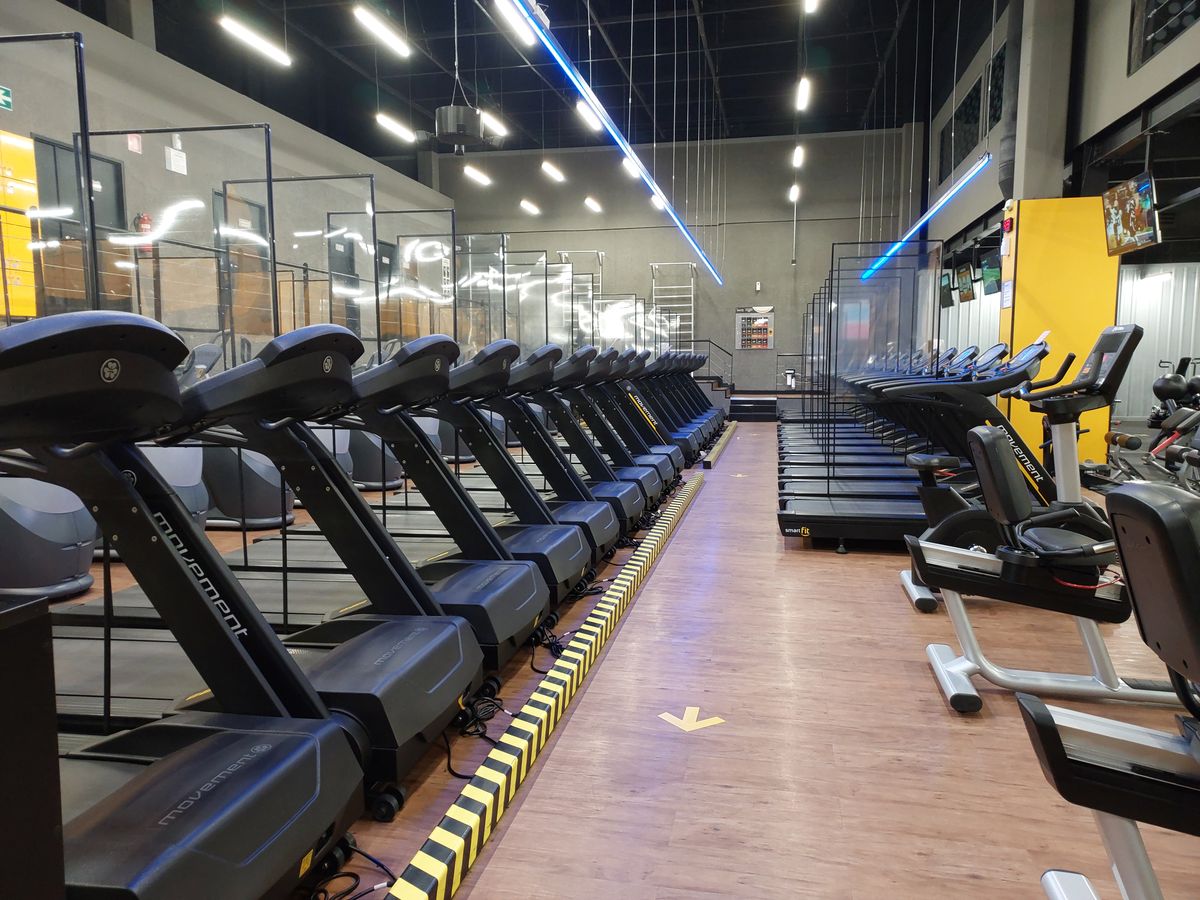
A row of treadmills and exercise bikes in a gym. Photo by Mario Garcia on Pexels. This is a general illustration of gym cardio equipment, not a photo of a workout from this article.
All of the numbers below are for one hour, for a person weighing about 70 kg (155 lb). Harvard Health lists calories for 30 minutes for a 155 lb person, so the hourly figures are those numbers doubled. The running figure at 10 km/h is a MET-based estimate, explained just below the table. Use our calorie calculator to work out your own number for a different weight or session length.
| Activity | Calories per hour (70 kg) |
|---|---|
| Walking on a treadmill, 3.5 mph (5.6 km/h) | 266 |
| Walking on a treadmill, 4 mph (6.4 km/h) | 350 |
| Stationary bike, moderate effort | 504 |
| Running on a treadmill, 5 mph (8 km/h) | 576 |
| Stationary bike, vigorous effort | 540-660 |
| Running on a treadmill, 6 mph (about 10 km/h) | About 686 |
Two things jump out. First, a moderate bike ride burns more than a brisk walk - 504 calories an hour against 266 to 350 for walking. Walking only beats the bike when you add a steep incline, which we will come back to. Second, running beats cycling at the same effort, but not by a huge amount. At a vigorous pace, NordicTrack puts the treadmill at about 10-12 calories a minute and the bike at about 9-11 a minute. At a moderate pace, both sit at about 8-10 a minute. In other words, the treadmill has an edge, and the edge grows as you run harder, but it is a small edge, not a doubling.
That fits the older research too. In a 1996 study published in JAMA, researchers compared energy use across six indoor exercise machines at the same perceived effort, and the treadmill came out on top. The authors called it the best indoor machine for boosting energy use under the conditions of that study. It is still the most quoted finding in this debate, and it still holds up - with one big caveat. The study compared people working at the same effort. In real life, effort is not fixed. If you can ride a bike hard for 45 minutes but can only run for 20 minutes before your knees or your lungs give up, the bike burns more in that session.
Calorie figures like these come from METs, short for metabolic equivalents. One MET is the energy you use sitting still. The formula is simple: calories = MET x body weight in kg x time in hours. Sport-calculator.com uses the same formula in its running calculator. So a 70 kg person doing an activity rated at 8.3 METs burns about 581 calories in an hour (8.3 x 70). Running at 6 mph is rated at 9.8 METs, which gives about 686 calories an hour for a 70 kg person. That is the figure in the table above.
These are estimates, not measurements of your body. Your fitness, your running style, how much you hold the handrails, and whether the machine is calibrated all change the real number. Treat the table as a fair comparison between activities, not as a promise. If you want a personal estimate, put your own weight and minutes into the calorie calculator on this site.
This is the bike's strongest case, and it is not close. Running is a high-impact activity. Every footstrike sends force up through your ankle, knee and hip. A treadmill deck is kinder than concrete, but it is still running. Cycling is different. You are seated, your weight is supported, and there is no impact with each step. PureGym puts it plainly: exercise bikes offer a lower-impact option, ideal for people with joint issues or those recovering from injuries, while treadmills engage more muscles and carry a greater impact on the joints.
That does not mean running ruins knees. Plenty of healthy runners do fine for years, especially if they build up slowly, wear decent shoes, and do not jump straight into daily long runs. But if you already have knee pain, sore hips, or an old ankle injury, the bike lets you train hard without paying for it the next morning. You can also do the bike the day after a hard run, which is why many runners use it for recovery sessions.
There is a middle ground on the treadmill too. Incline walking - 3.0 to 3.5 mph at a 10-15% incline - is hard work for your glutes, hamstrings and calves, without the pounding of running. NordicTrack recommends it as a lower-impact way to raise the burn on a treadmill. If you like the idea of a treadmill but your knees do not like running, start there. Our Japanese Walking post covers a similar idea: short bursts of faster walking mixed with slower walking, which is a gentle way to build up.
Here the treadmill wins, and the reason is the same impact that can bother your knees. Bones get stronger when they are loaded. Walking and running are weight-bearing, so they load the skeleton with every step. Cycling is not weight-bearing, so it does very little for bone density on its own.
The American Council on Exercise (ACE) lists impact exercises like running and jogging, and low-impact weight-bearing activities like walking, as ways to help maintain bone mass and density. Cycling does not appear on that list. NordicTrack makes the same point in its comparison. This matters most for women around or after menopause, and for older adults, who are the groups most at risk of bone loss. It does not mean a bike is bad for you - it is excellent for your heart and legs - but if bone health is one of your main goals, you need some weight-bearing activity as well, whether that is treadmill walking, outdoor walking, or strength training.
Numbers aside, the machine has to fit your home and your life. A treadmill is the bigger, louder machine. NordicTrack says most treadmills need about 7 by 3 feet of space when in use, though folding models help when you put them away. An exercise bike takes up much less floor space, and you can often tuck it into a corner. PureGym lists the same trade-off: treadmills typically occupy more room, while bikes are compact and suited to smaller workout areas.
Noise follows the same pattern. A treadmill makes motor noise plus the thud of your feet, which matters if you live in a flat, train early in the morning, or share a wall with a neighbour. A bike is quiet. You will hear the flywheel and your breathing, and not much else. That alone makes the bike the safer choice for many people in flats.
On price, entry-level home treadmills and stationary bikes sit in a similar range, according to NordicTrack, so do not assume the bike is always the cheap option. Where they differ is upkeep. A treadmill has a motor, a belt, a deck and an incline mechanism, all of which can wear out and need servicing. A bike has fewer moving parts and is simpler to look after. Before you buy either one, check our treadmill buying guide and our exercise bike buying guide so you know what to look for.
1. Sore knees, or coming back from an injury: pick the bike. Low impact is the whole point here. You can build fitness without loading a painful joint, and you can ride most days without needing a rest day for your knees.
2. Healthy knees, short on time, want the most burn per session: pick the treadmill. Running gives you the highest calories per minute, and incline walking gives you a hard workout without running at all. Keep sessions short and build up slowly.
3. Small flat, upstairs, or early-morning workouts: pick the bike. It is smaller, quieter, and you can use it while the rest of the house is asleep. This is a practical win that has nothing to do with fitness and everything to do with actually using the thing.
4. Over 50, or worried about bone health: pick the treadmill - for walking. You do not need to run. Brisk walking, especially on an incline, is weight-bearing and loads your bones. Pair it with some strength work and you have covered the bases the bike cannot cover alone.
5. A beginner who has quit before: pick the one you enjoy, and if in doubt, pick the bike. The best machine is the one you will still be using in three months. The bike is easier to start on, easier to do while watching a show, and easier to keep going for 30 minutes. If you love running, ignore this and get the treadmill - enjoyment beats theory every time.
If you can, use both. A hard treadmill day followed by an easy bike day is a solid weekly pattern, and it is how a lot of regular exercisers train without getting injured or bored.
This plan works on a treadmill or a bike. Do three sessions a week, with at least one rest day between them. On the treadmill, walk or jog. On the bike, pedal at a steady pace with light to moderate resistance. You should be able to talk in short sentences during the main part of each session. If you cannot, slow down. If you can chat easily the whole time, push a little harder.
| Week | Session | What to do |
|---|---|---|
| Week 1 | 3 x 20 minutes | Easy pace. 5 minutes warm-up, 10 minutes steady, 5 minutes cool-down. |
| Week 2 | 3 x 25 minutes | Easy pace. Add 5 minutes to the steady part. Treadmill: try a 2-3% incline for 5 minutes. |
| Week 3 | 3 x 30 minutes | Add intervals: 4 x 1 minute a little harder, with 2 minutes easy between each. |
| Week 4 | 3 x 30 minutes | Same as Week 3, but make the hard minutes a little harder, or add a 4th session if you feel good. |
After four weeks, keep the habit and change one thing at a time: a few more minutes, a little more incline or resistance, or one interval session a week. Do not add all three at once. If anything hurts in a sharp or new way, stop, rest, and get advice from a doctor or physiotherapist before you carry on.
A treadmill, per minute. At a vigorous pace it burns about 10-12 calories a minute, against about 9-11 a minute on a bike, according to NordicTrack. At a moderate pace the two are about even, at 8-10 a minute. The 1996 JAMA study also found the treadmill gave the highest energy use of six indoor machines at the same effort. But the bike can burn more over a week if you use it more often and for longer, because it is easier on your joints.
Yes. Cycling is low impact: you are seated, your weight is supported, and there is no footstrike. Running on a treadmill is high impact, even though the deck is softer than pavement. If you have knee, hip or ankle pain, or you are recovering from a lower-body injury, the bike is usually the safer place to start.
Yes, if you use it regularly and your food intake supports it. A moderate bike ride burns about 504 calories an hour for a 70 kg person, based on Harvard Health figures. That is a real contribution, but no machine outruns a diet on its own. Consistency matters more than the machine: three or four bike sessions a week, kept up for months, will do more than a treadmill you stop using after two weeks.
Walking can be enough, especially on an incline. Walking at 3.0-3.5 mph on a 10-15% incline is hard work for your legs and your heart, without the impact of running. Brisk walking is also weight-bearing, which helps your bones. Running burns more per minute, but you do not have to run to get fitter. Start with walking, add incline, and only add running when your body is ready for it.
The exercise bike. It has a smaller footprint, it is quieter, and it has no footfall noise for the neighbours below. A treadmill needs about 7 by 3 feet in use and makes motor and footfall noise. If space or noise is your main worry, the bike is the easy choice.
Note: calorie figures are estimates based on Harvard Health and MET values. Your actual burn will vary with your weight, fitness, and effort. If you have a health condition or an injury, talk to your doctor before starting a new exercise routine.
Comments
Post a Comment