on
Health Tips
- Get link
- X
- Other Apps
If you work from home, you have probably seen one by now. A slim, flat belt slides under a standing desk, someone strolls along at 2 miles an hour while answering emails, and the caption promises thousands of extra steps a day. Walking pads are everywhere on social media, and they are selling fast. The question is whether they actually do anything useful — or whether they are just an expensive way to feel busy.
The short answer is that they work, but only within limits. They are good at turning sitting time into gentle movement. They are not a replacement for proper exercise, and they will not, on their own, transform your weight. Here is what the evidence says, and where the catch is.
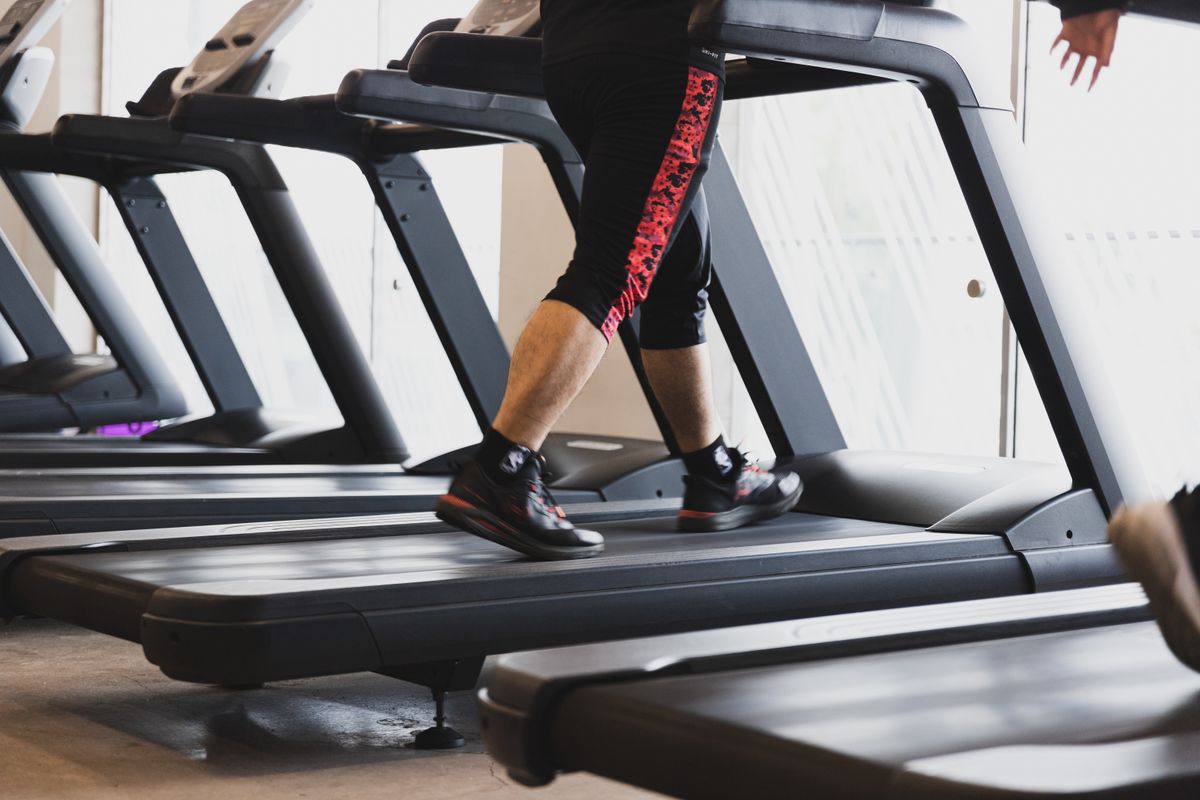
Photo: A person walking on a treadmill in a gym. Walking pads are slimmer, flatter versions of this idea, usually without handrails. Stock photo from Pexels.
A walking pad is a compact, flat treadmill with no handrails and, usually, no screen to lean on. Most models top out at around 3 to 4 miles an hour (about 5 to 6 kilometres an hour), which is a brisk walk rather than a run. You control the speed with a small remote or an app, and many pads fold or slide under a bed or a sofa when you are done.
That is the appeal. A full treadmill takes up a corner of a room and looks like gym equipment. A walking pad is meant to disappear. People mostly use them under a standing desk, in front of the television, or in a small flat where a normal treadmill would never fit.
They are not new technology. Treadmill desks have been around in offices for years. What changed is the price and the size: walking pads brought the idea home, and working from home gave a lot of people a reason to try one.
This is where it helps to look at research rather than marketing. A 2021 systematic review and meta-analysis in BMC Public Health looked at treadmill desks — the closest thing researchers have studied properly — across 13 studies. Pooling the laboratory data, walking while working burned roughly 105 extra calories an hour compared with sitting. That is the extra burn, not the total. You would burn some calories sitting anyway.
Other estimates line up with that, with the usual variation for body weight and speed. At a gentle 1.5 to 2.5 miles an hour, estimates from fitness sites put the total burn at roughly 170 to 360 calories an hour, depending on how much you weigh and how fast you walk. A heavier person burns more at the same speed, and a faster pace burns more than a slow amble.
Put it in a working day and the numbers are modest but real. Two hours of walking-pad time at the pooled extra rate of about 105 calories an hour adds up to around 210 extra calories a day. Over five days, that is roughly 1,050 extra calories a week — before you eat anything extra to make up for it. That is useful, but it is not a dramatic change on its own.
It can help, in the same way any extra movement helps: by adding to the small daily deficit that, over time, leads to fat loss. A commonly used rough figure is that a pound of body fat stores about 3,500 calories, so a 1,000-calorie-a-week extra burn, if nothing else changed, would work out to well under half a pound a week. In real life, appetite, food choices and how much else you move all matter more than the pad itself.
That is the honest version. A walking pad will not cancel out a diet that is well over your needs, and it will not replace strength training, which helps you keep muscle while you lose weight. What it can do is make it easier to stay in a small deficit without feeling as if you are dieting hard, because the movement is spread across the day and does not feel like a workout.
If weight loss is your goal, use our Calorie Calculator to get a rough idea of your daily needs, and treat the walking pad as one part of the plan — alongside food, sleep and some strength work — rather than the whole plan.
The strongest case for a walking pad is not calories. It is sitting less. Long, unbroken sitting is linked with poorer cardiometabolic health, and the NHS advises adults to break up long periods of sitting with activity. A walking pad makes that easy: you can move without leaving your desk or changing your clothes.
People also report steadier energy and a better mood on days they move more, and regular walking supports heart health. For beginners, or for anyone returning to exercise after a long break, a walking pad is a low-impact, low-intimidation way to build a daily habit. There is no gym to drive to, no weather to check, and no need to carve out an hour.
It is also a good way to add steps. If your day is mostly a chair, a car and a sofa, two hours of slow walking can add several thousand steps without a dedicated walk. That matters, because the step counts that are linked with better health in large studies are far easier to reach when movement is built into work, not bolted on afterwards.
First, the speed limit. Most walking pads will not let you run, and many have no incline at all. That caps how hard you can work. Once you are fit enough to walk briskly outdoors, a walking pad will feel easy, and easy is not always enough to keep improving your fitness.
Second, the belt is small. If you are tall, or you have a long stride, you may feel cramped, and you need to pay attention to where your feet are. There are usually no handrails, so balance matters more than on a normal treadmill. That is a real consideration if you have balance problems, dizziness, or a condition that affects your stability.
Third, durability and noise vary a lot. Cheaper motors can struggle with heavier users or long daily use, and some pads are louder than the adverts suggest — not ideal if you share a home or take calls all day. Check the weight limit, the warranty and honest reviews before you buy, and remember that a pad that lives under a bed still needs floor space when it is in use.
Fourth, typing while walking is harder than it looks. Most people can read emails and take calls at 2 miles an hour, but detailed work, precise mouse work and video calls are trickier. Many users end up walking in short blocks between tasks, rather than all day, which is fine — but it is not the effortless multitasking the adverts imply.
Talk to your doctor before using a walking pad if you have a heart condition, uncontrolled blood pressure, diabetes, severe knee or hip problems, vertigo, or any condition that affects your balance. Be cautious in pregnancy, and after any recent injury or surgery. If you feel dizzy, get chest pain, or develop joint pain that does not ease when you stop, get checked rather than pushing through.
Walking pads are also a poor buy for runners and for anyone whose main goal is serious fitness. If you want to get fitter, you will get more from brisk outdoor walking, a proper treadmill with incline, or the kind of interval walking we covered in our Japanese walking guide — or from a mix of all three.
They suit desk workers best: people who sit for most of the day, work from home, and want to move more without rearranging their life. They suit beginners, small homes, and anyone who finds the gym hard to stick with. They are also useful in bad weather, when an outdoor walk is not appealing, and as a second option alongside outdoor walks rather than a replacement for them.
If that sounds like you, a few habits make a pad work better. Walk at a pace where you can still talk, in blocks of 20 to 30 minutes rather than one long slog. Wear proper shoes, not slippers. Keep your posture upright and your screen at eye level, and stand up and stretch between blocks. Pair the pad with two days of strength work a week, and keep at least some outdoor walking in your routine for fresh air and a change of scenery.
Our treadmill guide is a useful comparison if you are torn between a walking pad and a full treadmill, since the trade-offs — space, speed, incline and price — are the same ones to weigh up.
Walking pads do work, in the sense that they turn sitting into moving and add a real, if modest, number of calories and steps to your day. The research on treadmill desks backs that up: roughly 105 extra calories an hour over sitting, in pooled studies. What they do not do is replace exercise, guarantee weight loss, or make you fit on their own.
If you sit all day and you will actually use one, a walking pad is a sensible buy. If you are hoping it will do the work for you, save your money and start with regular brisk walks outside — they are free, and they work just as well.
How many calories does a walking pad burn per hour?
Compared with sitting, about 105 extra calories an hour, based on a 2021 BMC Public Health meta-analysis of treadmill-desk studies. Total burn at 1.5 to 2.5 miles an hour is roughly 170 to 360 calories an hour, depending on your weight and speed.
Can you lose weight with a walking pad?
Yes, it can help, by adding a small daily calorie deficit — but only if your food intake does not rise to match it. On its own, the extra burn is modest, roughly 1,000 calories a week from two hours a day, five days a week.
Is walking on a walking pad as good as walking outside?
For steps and breaking up sitting, yes. For fitness, outdoor walking has advantages: varied terrain, fresh air, and the option to walk faster or uphill. A walking pad is best as a complement to outdoor walking, not a replacement.
What speed should I use on a walking pad?
Most people work best at 1.5 to 2.5 miles an hour (about 2.5 to 4 kilometres an hour) while working, and up to 3 to 4 miles an hour for a dedicated walking session. If you cannot type or talk comfortably, slow down.
Are walking pads bad for your knees?
Walking is low impact and is generally easier on knees than running, but a small belt and poor posture can cause problems. Wear supportive shoes, keep sessions moderate, and stop if a joint hurts. Check with a doctor if you have a knee condition.
Comments
Post a Comment